Equipment and other essentials
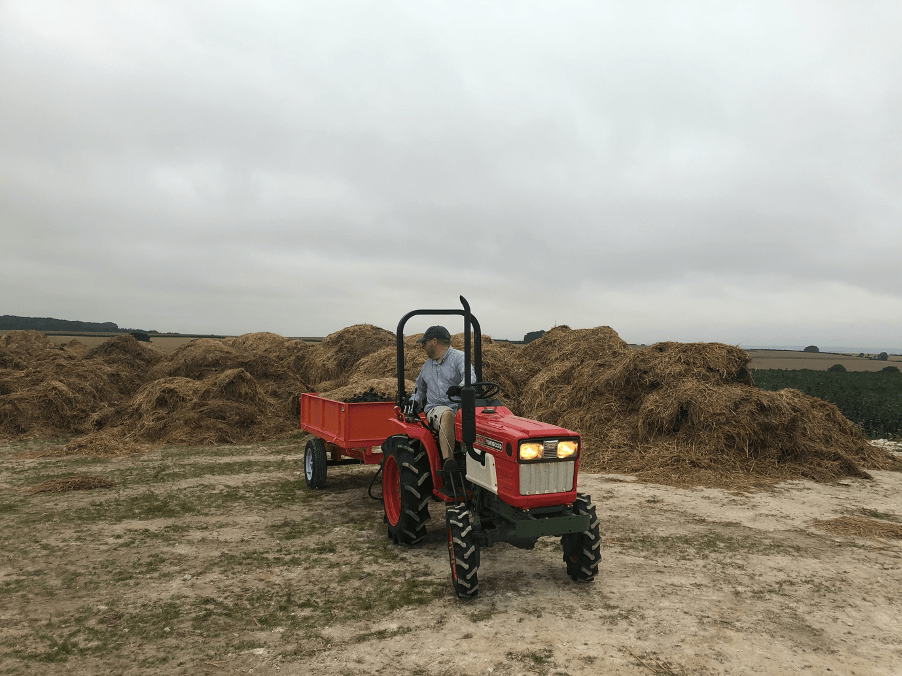
Our first year of trying to become smallholders has proved expensive, but we hope that we won’t need to replace all our newly bought equipment and fencing for a good many years. Famous last words?
Little Red was cheap as tractors go and positively bargain basement compared to our neighbour’s impressive vehicles (one of their tractors alone cost an eye-watering £350,000), but he was a big purchase for us since we are trying, like most smallholders, to do everything on a shoestring. We’d always wanted a tractor and knew we’d get a lot of use out of it because we’ve struggled along for the past few years with our trusty lawn tractor and its tiny trailer. It’s fine for smaller jobs such as moving a sack of feed or collecting up sticks but if you overload it the trailer simply tips up and dumps everything back on the ground. It’s also horrendously uncomfortable to drive in the field which is very tussocky and uneven. With no suspension, your fillings are almost shaken out, or at least mine are, Hannah doesn’t have any, thank goodness!
Our other big purchases have been our two poly tunnels, one of which is still in the process of being erected. The first one has been used to great effect this summer to grow tomatoes, aubergines, cucumbers, peppers, butternut squash and basil. Well, the cucumbers weren’t very successful because they were bitter and inedible, but the rest of the crops have been prolific and good to eat and we’ve been able to share some of the inevitable glut with the neighbours.
Our second poly tunnel is for the sheep and, instead of being completely covered in plastic, it will have mesh sides and a more opaque, plastic roof than the horticultural tunnel. We’re hoping it will prove useful over winter and also for lambing in due course. From what we’ve read in our twin ‘bibles’ (‘The Haynes Sheep Manual’ and Tim Tyne’s definitive ‘The Sheep Book for Smallholders) sheep need a really good airflow inside buildings to remain healthy, even more so than horses and cows, since they are very susceptible to respiratory illnesses. If we were in any doubt about it our neighbour warned us that he’d had his worst ever year for young stock mortality when he decided to keep the cows and calves indoors one winter and we know that it would be the same for sheep, perhaps with even worse outcomes.
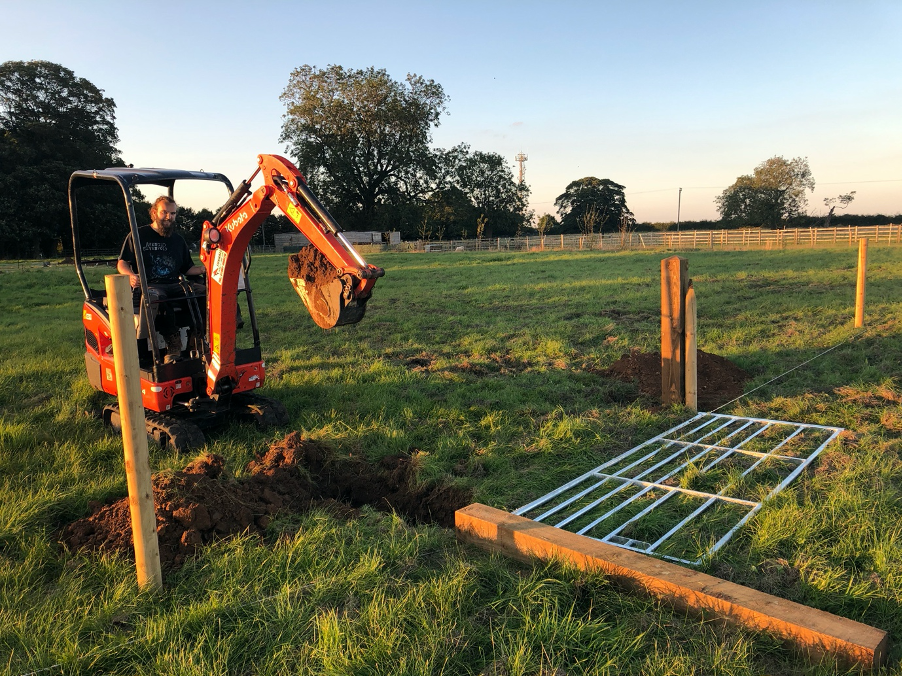
Another big outlay has been money spent on fencing. We’ve done it all ourselves with the aid of a hired mini digger, a post basher and lots of elbow grease from George and Tony. We’ve bought numerous 1.65 metre wooden posts and about 450 metres of stock fencing which will be stapled to the posts. Gateposts, hinges, gates and their various fasteners have been another big expense, but we’re determined to make as many separate paddocks as possible so that we have enough flexibility to be able to move sheep and ponies around easily and also to aid with worm control i.e. having some clean, or at least cleaner, pasture available when necessary and not overgrazing any particular area. To this end we’re in the process of making several small paddocks for the miniature ponies and sheep and a larger one for the biggest pony. We have some smaller gates which the sheep and ponies can get through safely, but we’ve made sure that all parts of the field will be accessible for large tractors because of the inevitable deadstock removal at some point. Not nice to think about I know but I’d rather be prepared.
 Foxglove Farm