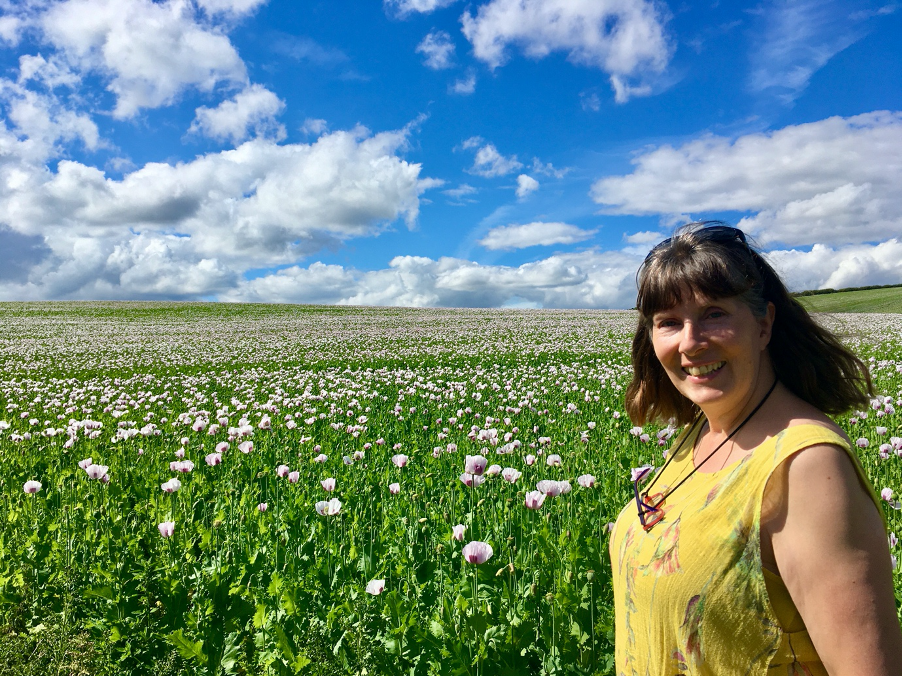
There were acres and acres of pale purple opium poppies this year
This week’s post is about the Lincolnshire Wolds in general rather than Foxglove Farm itself. When you are travelling and get into conversation with someone who asks where you live you can guarantee that most, if not all, will say, “Ah, Lincolnshire, very flat there isn’t it”? Part of me wants to agree because a heck of a lot of Lincolnshire is flat. Very flat indeed. Not the Wolds, however, which consists of beautiful, rolling countryside, that’s used predominantly for arable farming and pastureland. This year we’ve seen some more unusual crops rather than the usual wheat, oil seed rape, sugar beet, oats, barley, peas and beans etc. There was a beautiful field of sunflowers just up the road that was being grown for bird feed and this field of Papaver somniferum, commonly known as the opium or bread seed poppy, was so beautiful earlier in the year that drivers were stopping to have a look and take photographs, as did we. The poppies grow well in the Lincolnshire Wolds’ well-drained alkaline soil and thrive in hot summers. They are harvested for their latex, which contains the opium, once the poppy heads have dried on the plants (by the pharma company themselves rather than the farmer), and taken away to be processed for medicinal use in hospitals etc.
Foxglove Farm is set 123.2m above sea level which is very comforting when we think about the increased flood risk currently experienced by large swathes of the county, particularly near the coast, although river flooding is also a potential problem in some areas too, including the unofficial “capital of the Wolds”, the Georgian town of Louth. The downside, and there always has to be one it seems, is that we frequently suffer from the curse of the Lincolnshire wind. Called the ‘lazy East wind’ because “It dun’t go round yer, it blows straight threw yer”!
The wind often causes us problems because we are surrounded by mature trees, including sycamores, horse chestnuts, ash and various specimen conifers, all of which shed branches and twigs each time the gales come – and they come frequently – which means we are constantly having to pick up sticks from the lawns so that we can mow properly. It’s not unusual to get a trailer full of sticks from each lawn and we’ve recently invested in litter pickers to grab the smaller twigs which saves bending down quite so much.
We’ve also had several large trees fall down and George and Tony have been out with chainsaws to reduce them to useful firewood. On one memorable occasion they had to chop up half a big Scots Pine that had fallen towards the post and rails fencing surrounding the livestock paddocks but had, fortunately, come to a stop about 15cms above the fence by getting itself entangled in the branches of another tree that held it up, albeit somewhat shakily. If we’d left it, it would have brought down a section of fence and the sheep and horses would have been out on the back garden munching the tasty grass, not to mention the expense if we’d had to repair the fence.
Battling the elements can be tiring but when the sun shines on our hillside there’s nowhere more glorious. This sunflower was a late bloomer and I love the colour – such autumnal splendour!
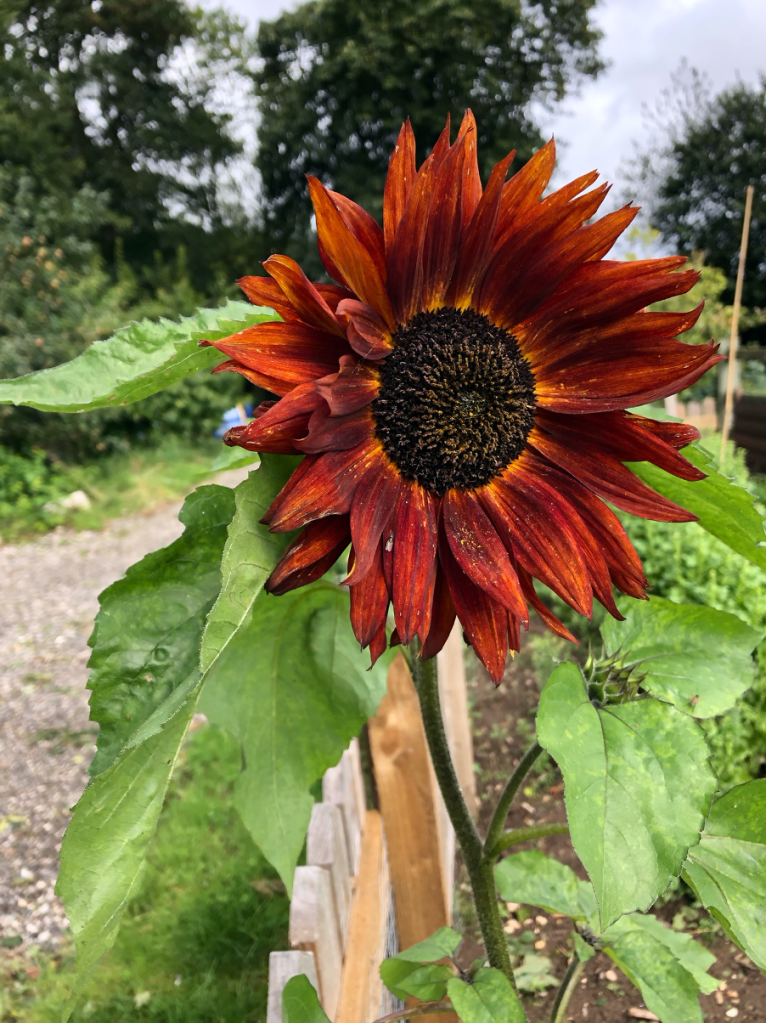
A late blooming sunflower at Foxglove Farm
 Foxglove Farm